On the whole I feel that our preliminary film task went quite well. We managed to film all of the storyboard correctly and added our own parts so that everything was included into the film and the story made sense. Considering only one person in our group had done any filming on a regular basis, I think we managed to use the equipment well and we didn't have to film any scenes again because we'd filmed them wrong.
The strengths of our group is that once we started to work we managed to do most of it in one day, meaning that we had more time to edit our clips. We also edited our film very well and everyone pitched in to do something. We worked very well together as a team and were precise about our work. Our continuity was good as well because we made sure that Rhys and Rupert wore the same clothes for the next day of filming.
However some things did go wrong. There was a problem with uploading the film onto the computer as well because the computer wouldn't pick up the camera, so me and Rupert had to go back in a free lesson to sort it out, this put us behind on our editing. Also the file corrupted itself on our groups external hard drive so one member of our group had to redo the video at home.
Overall I think that our preliminary task went well because no matter what troubles we faced we still managed to get our video finished on time.
Here is our preliminary task video..
Liana :)
Showing posts with label Preliminary film task. Show all posts
Showing posts with label Preliminary film task. Show all posts
Saturday, 18 September 2010

Production.
After we had designed our storyboards we were then given a different groups storyboard to film, and to see how informative/helpful their storyboards were for filming. We were told that we needed to film the groups storyboard as they had instructed and follow any writing the had written down. The storyboard we were given was quite hard to follow, and we were advised to add in little pieces so that the story would make sense.
The equipment used:
Camera.

The camera we used could have been better, as you had to start recording 2 seconds before you started acting and for 2 seconds after you'd stopped as not to miss anything. This meant we had extra editing to do.
Tripod

The tripod was a good piece of equipment as it allowed the filming to be straight and steady, and meant we could film from every angle. However sometimes we didn't always get the shot completely straight so some of the filming was slanted slighty.
During our task I filmed Rupert walking down the corridor and part of the conversation, I also did a lot of the editing on Premire Elements, and I made sure we had no jerky starts or stops so that everything ran smoothly in the video.
Liana :)
The equipment used:
Camera.

The camera we used could have been better, as you had to start recording 2 seconds before you started acting and for 2 seconds after you'd stopped as not to miss anything. This meant we had extra editing to do.
Tripod

The tripod was a good piece of equipment as it allowed the filming to be straight and steady, and meant we could film from every angle. However sometimes we didn't always get the shot completely straight so some of the filming was slanted slighty.
During our task I filmed Rupert walking down the corridor and part of the conversation, I also did a lot of the editing on Premire Elements, and I made sure we had no jerky starts or stops so that everything ran smoothly in the video.
Liana :)
Thursday, 16 September 2010
Pre-Production.
Firstly we got into groups and decided what we would do to complete all aspects of our preliminary task, how to include all the camera angles and different shots. We also discussed how to make our video unusual, and not just the basic outline. Then we broke down the shots into scenes and created a storyboard for each scene. The use of storyboards is important because you can add all the information that is needed to create the task set and it means you won't forget to add all the extra bits, such as how many times you would use the over the shoulder shot.
Everyone in our group created a scene from the storyboard and my scene was the conversation part of our preliminary task. In my storyboard I included reverse shot, match on action, and 180 degree shot.

Liana :)
Everyone in our group created a scene from the storyboard and my scene was the conversation part of our preliminary task. In my storyboard I included reverse shot, match on action, and 180 degree shot.
The picture below shows the storyboard that I created. Each section shows a different shot and includes instructions, an image and the camera angle. The green arrows show were the camera should be pointing for the shot and the writing under the image gives instructions to what is happening in the scene, also how many times a shot will be used in succession.

Liana :)
Tuesday, 7 September 2010
Preliminary Task.
Continuity task involving filming and editing a character opening a door, crossing a room and sitting down in a chair opposite another character, with whom she/he then exchange a couple of lines of dialogue.
This task should demonstrate match on action, shot/reverse shot and 180-degree rule.
Storyboards should include: shot number, an image, scene information, set, camera angles, costume, lighting and music.
Camera angles: long shot, medium shot, close up, extreme close up, match on action, over the shoulder and shot/reverse shot.
Extreme close up: a shot used to show characters facial expressions or to emphasize detail.

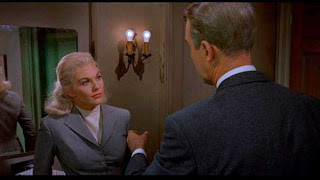
Over the shoulder shot/reverse shot: used to show two characters during conversation and places the camera at an easy angle to do the 180 degree shot.
Liana :)
This task should demonstrate match on action, shot/reverse shot and 180-degree rule.
Storyboards should include: shot number, an image, scene information, set, camera angles, costume, lighting and music.
Camera angles: long shot, medium shot, close up, extreme close up, match on action, over the shoulder and shot/reverse shot.

Over the shoulder shot/reverse shot: used to show two characters during conversation and places the camera at an easy angle to do the 180 degree shot.

Liana :)
The 5 C's.
Camera Angles


Continuity
Continuity
Cutting (editing)
Close ups
Composition.
When telling the audience where the film is set, they use long shot. This lets you show all the important information.

A medium shot is the most commonly used shot in cinema. It is used to show any character interaction.

Something/someone important to show the audience use a close up.

Continuity
Generally refers to visual errors. In very basic terms it means having a character in a red top one second and a blue top the next.
Cutting/Editing
Essential otherwise films would be in real time and never end. It also allows the director to change locations. The main use is to either add pace to a scene to make it exciting, or to slow it down for dramatic emphasis.
Liana :)
Subscribe to:
Posts (Atom)